
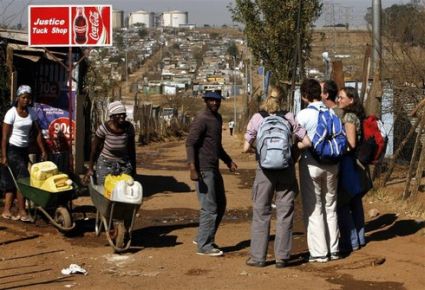
Photo: www.instablogsimages.com
Tourism becomes the leading sectors and it is believed by most people to improve the welfare of the local community. UNWTO data (Tourism Highlights 2009) shows that tourism has been growing rapidly. International tourism receipts reached US$ 944 billion in 2008. The number of international tourists visits only 25 Million in 1950 rising to 277 million in 1980, 438 million in 1990, 684 in 2000, and reached 922 million in 2008. Tourism generates the local economy through tourist expenditures, employment opportunity and infrastructure development. The tourism sector becomes an important tool in the promotion of peace, environmental sustainability and sustainable development.
Instead of increasing the quality of local community, tourism has other consequences that will “impoverish” the local community. A dilemma occurs in conditions of tourism development. Tourism needs local human resources, but poor local condition often causes lack of local community participation. They have low level of education, skills and access to economic or political. This may lead to the helplessness to response the community development of the tourism industry. The poor condition of local community can lead to the existence of domination by the “outsiders”, especially in tourism investment. Tourism as an industry requires large capital and usually does not reachable by the local community.
In the development of tourism requires a variety of resources both natural and human. Tourism touches many aspects of community’s life such as environmental, economic, social, cultural, and political. It is required a commitment, seriousness, and social and moral responsibility to develop tourism in order to improve the quality of life.