
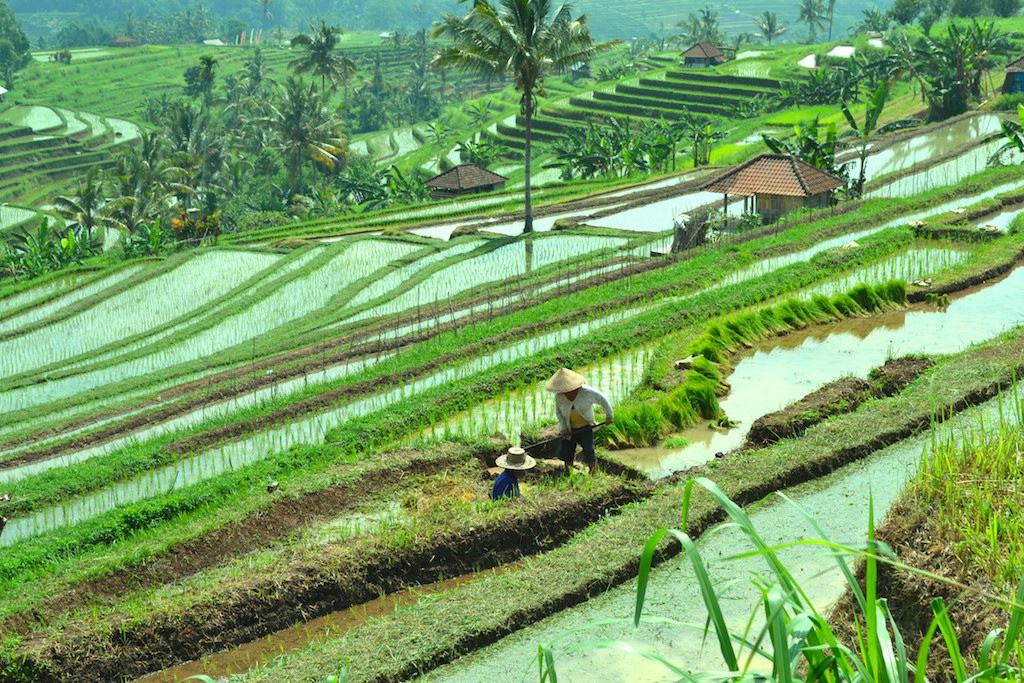
Anyone who visits Jatiluwih will be amazed by the vast expanse of green rice fields. As one of UNESCO’s world cultural heritage sites, the Jatiluwih terraces, covering an area of 303.4 ha, are visited by tourists from various parts of the world.
Tourists are impressed by the beauty of the Jatiluwih terraces. They admired the traditional irrigation system called Subak. From this local wisdom, all rice fields receive water for their plants.
Apart from trekking in the rice fields, tourists can visit the houses of Jatiluwih Village residents. There, they can see a unique rice storage place (Jineng). According to residents, they inherited Jineng hundreds of years ago. Jineng has been around since they were born. A Jineng has the number 1979 written on it. In another family’s house, you can find a Jineng built in 1958. The two Jinengs were new Jinengs that were made that year to increase their rice yields.
One family has 1 Jineng. Some families have 2 to 3 Jineng. Ownership of Jineng is a matter of prestige. It is related to the size of the rice fields owned.
Farmers in Jatiluwih still maintain the tradition of planting red rice in January every year. In the Balinese calendar calculations using the Saka year, January is the seventh month (Sasih Kapitu). This agreement is outlined in traditional rules (awig-awig). They believe the brown rice harvest will be better if planted in January. Once upon a time, several residents tried to plant white rice, but the results were not optimal.
The people of Jatiluwih are known to adhere to customs and traditions. One tradition that is still carried out is planting jackfruit trees. However, they do not make a profit from selling their trees. They only use it for building temples or houses.
The process of planting rice begins with seeding. It takes around 3-4 weeks to prepare the rice seeds and the land for planting at this stage. The nursery method in Jatiluwih Village is very unique. Farmers generally use grain in seeds as seeds. In Jatiluwih, farmers use grain that is still complete with rice trees. They are looking for quality seeds to plant in water-logged soil. The grain grows into rice seeds that are ready to be produced.

Some farmers plant trees or secondary crops such as coconut palms, bananas, long beans, and corn between planting rice. The crops are used for cooking purposes for the family.
Around the rice fields is a restaurant for tourists who have finished trekking. Traders sell red rice, sticky rice and white rice.
In response to the presence of tourists, residents provide homestay services. Tourists can stay in homestays or villas built in Jatiluwih. Staying in Jatiluwih can be a valuable experience for tourists. Fresh air and beautiful views can refresh the mind.
When it rains, prepare shoes for trekking. If you are wearing slippery sandals, going on an adventure by walking without wearing sandals is recommended. You can wash your feet at the finish point of the trekking route.
Apart from planting rice, farmers also raise Bali cattle. Their passion for farming shows their kind heart. Farming is a fun job and part of maintaining ancestral traditions and heritage. Farmers are very close to the culture and rituals. A form of service to others to provide rice as a staple food. A form of sincere devotion and devotion to God Almighty, perfect goodness.
by: Made Sukana (21 December 2016)